

The Erik Hazelhoff Roelfzema Foundation has taken note of the new book by Petra Alkema and of the public discussion that has arisen as a result. We believe it is important that substantial, well-substantiated research into the Second World War be taken seriously. The book touches upon sensitive themes: heroism, collaboration, responsibility, and the way in which we in the Netherlands engage with wartime narratives. This calls for meticulousness—both in terms of facts and tone.
One of the Foundation’s objectives is to keep the history of the Second World War alive through the true story of Erik Hazelhoff and his contemporaries. Particularly in an era of disinformation and polarization, it is essential that stories concerning war, occupation, and resistance be recounted as factually as possible. We therefore wish to embrace all serious sources of information that help to describe history more accurately—including critical corrections to previously established narratives. Consequently, we are fully supporting an independent review of Alkema’s book and its underlying sources by independent experts with the sole objective of upholding the quality of historical scholarship.
Undeniably Part of the Resistance
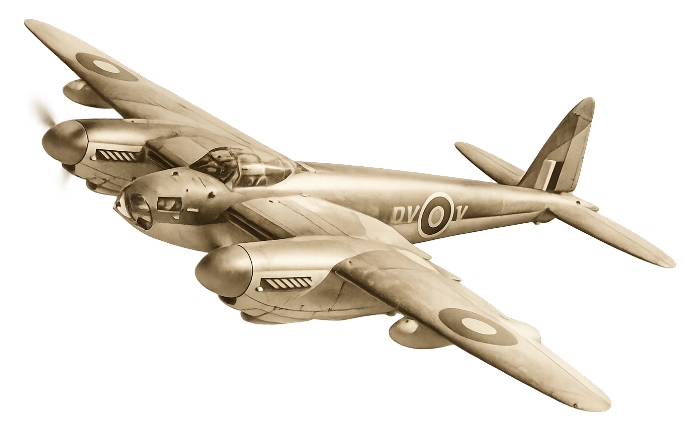
At the same time, we wish to correct several key points raised in Alkema’s book, as well as the public perception that has recently emerged as a result. Specifically, the suggestion that there is “absolutely no evidence or valid indication” that Hazelhoff was involved in the resistance—and the implication that he actively collaborated with the Germans—are factually incorrect. Historical sources demonstrate that he was involved in high-risk clandestine activities against the occupying forces; that he undertook seventeen perilous crossings of the North Sea to drop off agents; and that he flew seventy-two missions in Allied service. These are not signs of collaboration, but rather of active
participation in the struggle against the German occupier.
The central question is not *whether* Erik Hazelhoff performed acts of resistance, but rather how we should weigh them from a moral and historical perspective. A resistance hero operates within a wartime context and is not an unblemished icon; he is a fallible human being who, under extreme circumstances, repeatedly subordinates his own safety to a greater moral cause. From this perspective—and based on the current state of the available sources—the Foundation continues to regard Erik Hazelhoff Roelfzema as a resistance fighter. Not an infallible saint, but certainly someone who repeatedly risked his life in the fight against the occupier, and whose story—precisely in its complexity and humanity—remains relevant to new generations.“